
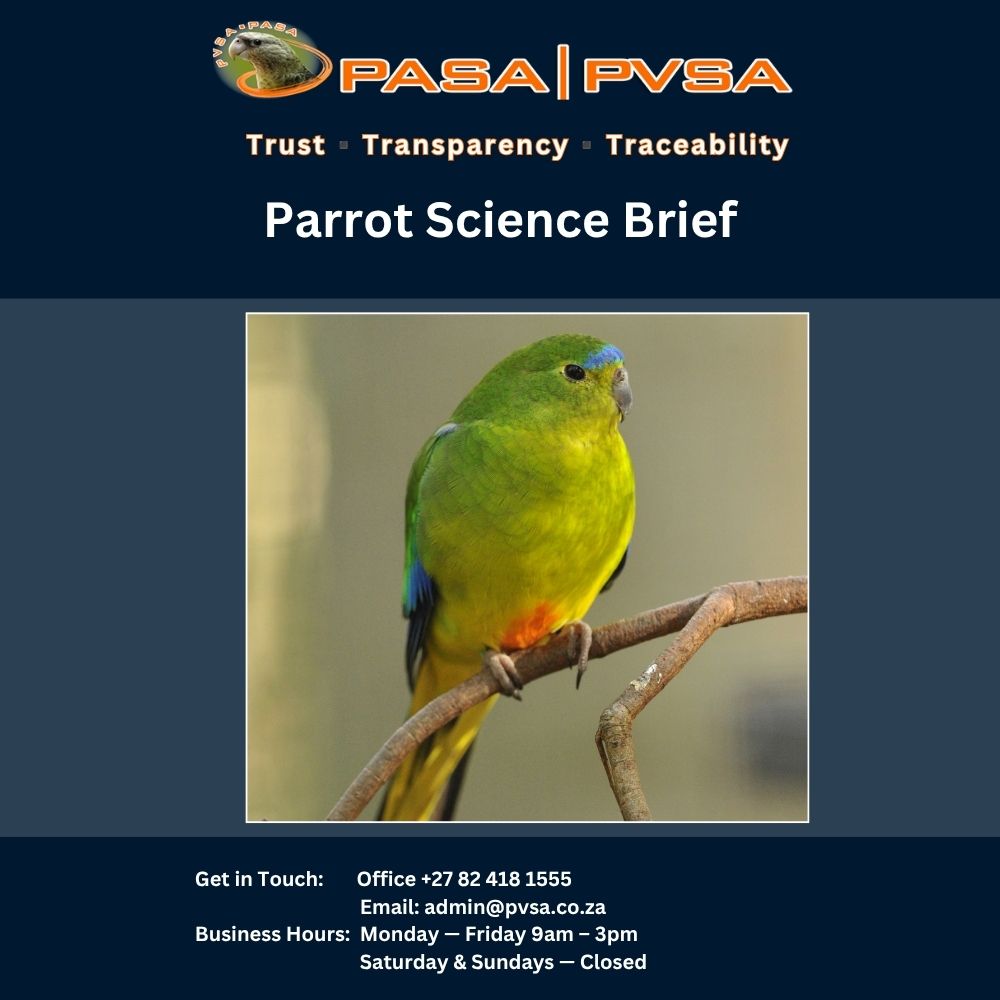
Australia has begun a major vaccination programme aimed at protecting some of its most vulnerable native birds against H5 bird flu.
The programme includes threatened parrot species such as the Orange-bellied Parrot and Swift Parrot. Although this is an Australian initiative, it carries an important message for aviculture and conservation worldwide: properly managed captive populations can play a direct role in protecting threatened species.
What has changed?
On 17 September 2026, the Australian Government confirmed nationally endorsed vaccination plans covering 9,916 native birds from 162 species.
The species identified for vaccination include:
- Orange-bellied Parrots;
- Swift Parrots;
- little penguins;
- Regent Honeyeaters; and
- Plains-wanderers.
The programme follows vaccine trials and pilot studies conducted with the involvement of CSIRO and other scientists.
The Australian Government has described the programme as a nationally coordinated effort to protect vulnerable native birds from the growing threat of H5 bird flu.
Orange-bellied Parrots form part of the programme
Around 350 captive Orange-bellied Parrots are expected to be vaccinated.
Importantly, the programme includes young birds bred at the Five Mile Beach Wildlife Management Facility. Some of these birds are intended for release into the wild at Melaleuca in Tasmania.
The captive population therefore serves two purposes:
- It provides an insurance population should the wild population suffer further losses.
- It produces birds that can support the recovery of the wild population.
This is a practical example of how responsible captive breeding can form part of a wider conservation strategy.
Why does this matter for aviculture?
Captive populations are sometimes treated as being separate from conservation. This programme demonstrates that the two can work together when breeding populations are managed responsibly.
However, conservation value does not come from breeding birds alone. It depends on the quality of the management and records supporting those birds.
Effective conservation breeding requires:
- accurate identification of individual birds;
- reliable parentage and breeding records;
- genetic management to avoid unnecessary inbreeding;
- proper quarantine and disease surveillance;
- documented transfers and movements;
- veterinary oversight; and
- cooperation between breeders, scientists and conservation authorities.
This is where responsible aviculture can make a meaningful contribution. A well-managed captive population can preserve genetic diversity, support research and potentially provide birds for carefully planned recovery programmes.
What the announcement does not prove
This development must be interpreted carefully.
The Australian programme is a government-led conservation intervention. It is not a peer-reviewed study proving that vaccination has already improved the survival or recovery of these parrot populations.
The vaccine:
- requires two doses;
- is not completely protective;
- cannot practically be administered across most wild bird populations; and
- does not replace quarantine, disease surveillance or strong biosecurity.
The programme should also not be interpreted as advice for South African breeders to vaccinate their birds. Vaccination decisions must be made with appropriate veterinary advice and in accordance with applicable regulations.
The wider lesson for conservation breeding
The strongest message from this programme is that managed captive populations can be treated as valuable biological reserves.
For aviculture to be recognised in this role, breeders and breeding facilities must be able to demonstrate where birds came from, how they were bred, how they are identified and how their health and genetic value are managed.
This is particularly important when captive-breeding claims are considered in conservation and CITES discussions.
Traceability, lawful acquisition, breeding records and veterinary oversight strengthen the credibility of responsible aviculture. Poor records and uncontrolled trade weaken it.
PASA/PVSA’s perspective
PASA/PVSA supports responsible, lawful and well-documented aviculture that contributes to bird welfare, conservation knowledge and the long-term survival of species.
The Australian programme shows what becomes possible when captive breeding, science, veterinary care and government conservation planning work together.
Responsible captive breeding can contribute to conservation—but that contribution must be supported by proper identification, traceability, health management and accountable record-keeping.
Scientific status
This development is classified as a substantive government and technical programme update.
It is not a peer-reviewed research paper or preprint. Results on vaccine effectiveness, survival and longer-term population outcomes will still need to be assessed as the programme progresses.
Sources: