
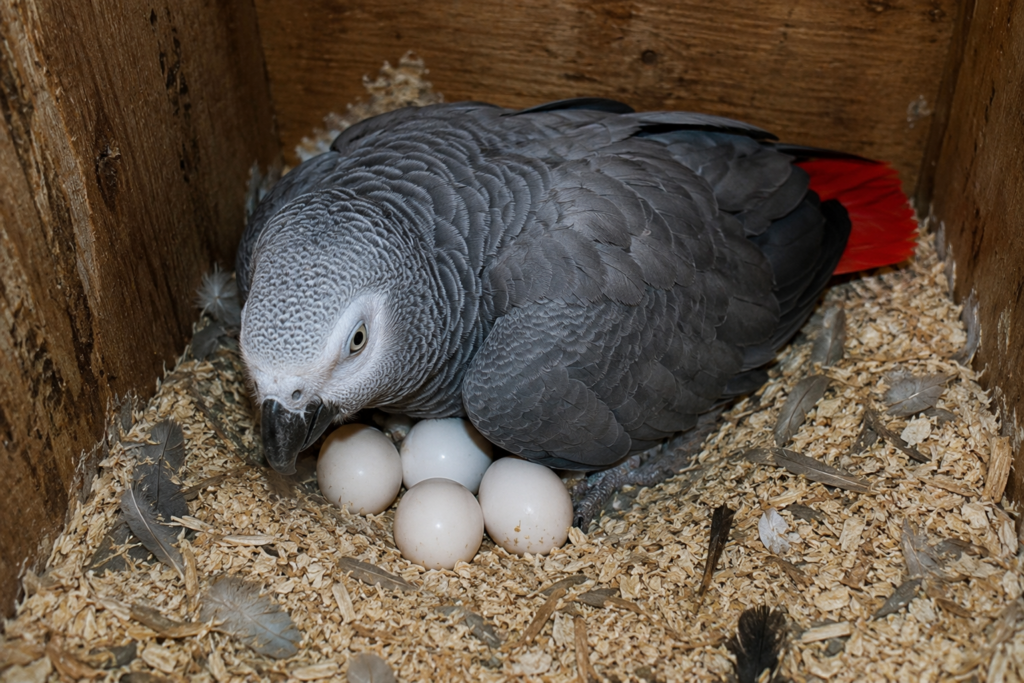
As the 2026 breeding season approaches, the Parrot Breeders Association of Southern Africa (PASA) reminds all members of the importance of complying with both South African legislation and international regulations governing the keeping, breeding, and trade of parrots.
This notice reinforces the guidance previously issued in PASA Bulletin – 25 September 2024 regarding the sale of parrot eggs and the legal implications associated with such transactions.
Understanding the Legal Position
The sale of parrot eggs is not automatically illegal in South Africa. However, the legality depends on the species involved and the legislation applicable to that species.
Members should note the following:
- The sale of eggs from many species may be lawful where all applicable provincial and national legislation is complied with.
- Species listed under CITES Appendix I are subject to significantly stricter controls.
- Any import, export or re-export of eggs from CITES-listed species requires the appropriate CITES permits issued by the relevant Management Authority.
- Veterinary import requirements imposed by the receiving country must also be complied with where applicable.
Why CITES Regulates Eggs
The Convention on International Trade in Endangered Species of Wild Fauna and Flora (CITES) regulates international trade in endangered wildlife, including eggs of listed species.
For legal international trade, authorities must ensure:
- The specimens were legally acquired.
- Trade will not be detrimental to the survival of the species (Non-Detriment Finding).
- The movement of specimens is fully documented and traceable.
- National legislation, including the National Environmental Management: Biodiversity Act (NEMBA), is complied with.
Unlike live birds that can be permanently identified through closed rings or microchips, eggs cannot be uniquely marked for identification. This creates significant traceability challenges and is one of the reasons why trade in eggs receives particular scrutiny from enforcement authorities.
Special Attention – Western Cape
Members operating within the Western Cape should be aware that provincial legislation imposes additional requirements.
Under the Cape Nature Ordinance 19 of 1974, a “wild animal” includes the eggs of non-domesticated species. Consequently, the keeping, transport, sale, import or export of eggs from protected species may require permits in addition to any CITES documentation.
PASA’s Position
PASA has always promoted:
- Responsible aviculture
- Legal and ethical breeding
- Conservation through compliance
- Transparency and traceability within the hobby
Accordingly, PASA strongly advises members not to participate in any activity where the legality is uncertain or cannot be demonstrated.
PASA distances itself from any activity that contravenes South African legislation, provincial conservation legislation, CITES requirements or any other applicable law relating to the keeping, breeding or trading of parrots.
Code of Good Conduct
Members are reminded that participation in unlawful activities may constitute a breach of the PASA Constitution and Code of Good Conduct.
Following a fair investigation and an opportunity for the member to respond, disciplinary action may include termination of membership where a member is found to have:
- Acted contrary to PASA’s objectives or Code of Good Conduct.
- Brought PASA or its affiliated clubs into disrepute.
- Acted against the interests of PASA or supported unlawful conduct.
- Repeatedly violated the Code of Conduct.
Our guiding principles remain:
Trust. Transparency. Traceability.
These principles are fundamental to protecting responsible aviculture and maintaining the credibility of South Africa’s parrot breeding community.
Members Are Encouraged to Read
Members are encouraged to familiarise themselves with the following resources:
- PASA Bulletin – 25 September 2024: Statement relating to the sale of eggs and the legal implications.
- Bangkok Post article highlighting the international prosecution of a parrot egg smuggling case, illustrating the increasing global enforcement of wildlife trafficking laws.
- PASA Code of Good Conduct and applicable provincial conservation legislation.
For additional guidance, members who are uncertain about the legality of any transaction are encouraged to contact the relevant provincial conservation authority before proceeding.
Issued on behalf of the PASA Executive Committee.