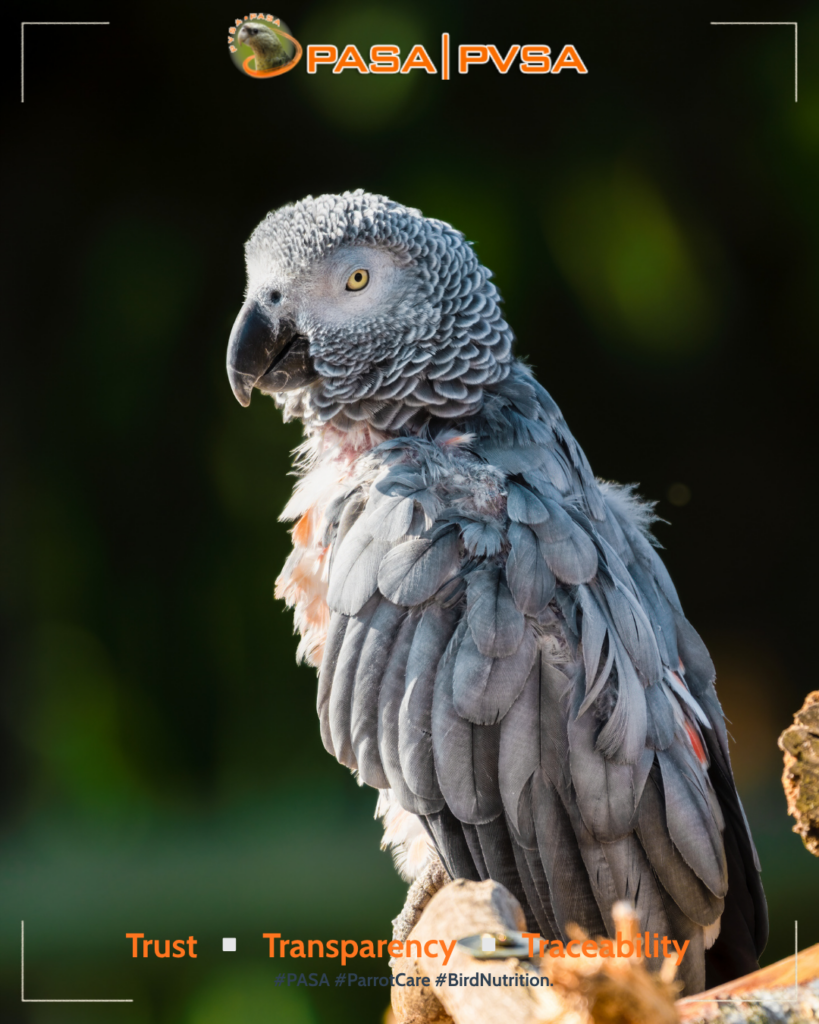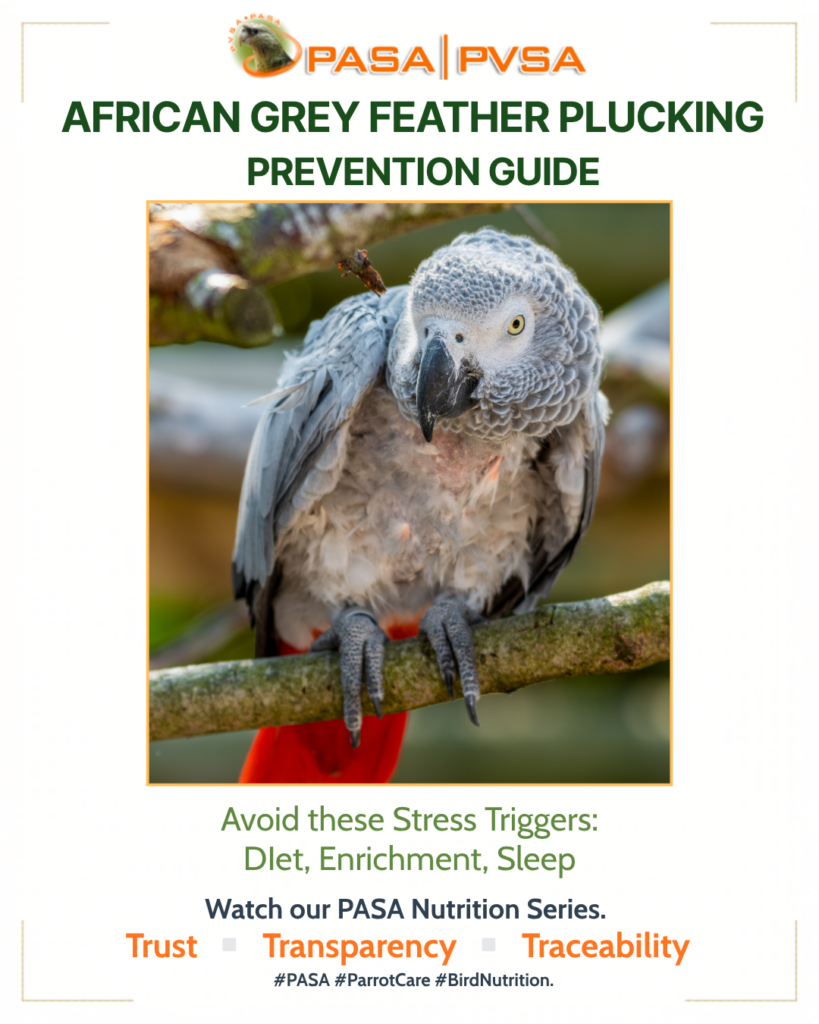
Parrot Association of Southern Africa presents this complete guide to African Grey Feather Plucking prevention, stress reduction, and responsible ownership.
African Grey Parrot are among the most intelligent parrots in the world. Their intelligence makes them exceptional companions, but it also means they are highly sensitive to stress, boredom, and routine changes.
Because of this, African Grey Feather Plucking is one of the most common behavioural concerns seen in captivity.
Why African Grey Feather Plucking Happens
African Grey parrots often pluck feathers when their physical or emotional needs are not met.
Common causes include:
Stress and Anxiety
- Loud homes
- Family conflict
- Sudden changes
- New people or pets
- Lack of routine
Boredom
A clever bird without stimulation may start over-preening.
Poor Sleep
African Greys need 10 to 12 hours of quiet darkness each night.
Diet Deficiencies
Low calcium and poor nutrition often contribute.
Medical Issues
Always rule out:
- Parasites
- Skin irritation
- Liver disease
- Pain
- Infection
Best Daily Routine to Prevent African Grey Feather Plucking
Routine is essential for African Greys.
Keep the same times daily for:
- Wake up
- Feeding
- Out-of-cage play
- Training
- Sleep
Predictability lowers anxiety.
Best Diet for African Grey Feather Plucking Prevention
Feed:
- Quality pellets
- Fresh vegetables
- Sprouts
- Moderate fruit
- Limited seed
Important foods include:
- Kale
- Spinach
- Carrot
- Sweet potato
- Broccoli
- Bell peppers
Fresh water daily is essential.
Mental Enrichment for African Grey Parrots
African Grey parrots need work to do every day.
Use:
- Puzzle toys
- Foraging trays
- Recall training
- Target training
- Paper shredding toys
- Object naming games
A busy mind prevents destructive habits.
Sleep Requirements for African Grey Parrots
Sleep is critical.
Provide:
- 10 to 12 hours darkness
- Quiet room
- No television noise
- Same bedtime nightly
Poor sleep often triggers feather plucking.
Early Warning Signs
Watch for:
- Feather chewing
- Nervous pacing
- Screaming
- Sudden silence
- Over-preening chest feathers
- Fearfulness
Early correction gives the best results.
If Feather Plucking Has Started
Take these steps immediately:
- Avian vet examination
- Improve sleep schedule
- Increase enrichment
- Improve nutrition
- Remove stress triggers
- Maintain routine
Golden Rule
A thinking African Grey needs a job.
Without enrichment, it may create one through feather plucking.
Why PASA Supports Responsible Breeding
Parrot Association of Southern Africa promotes ethical aviculture, responsible breeding, education, and improved welfare standards throughout Southern Africa.